
Drought, Population Pressure, and Inequality Drive Intergroup Conflict in the Precontact North American Southwest
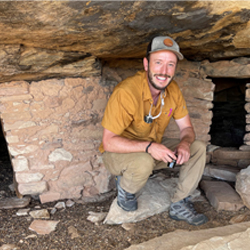 Authors:
Weston C. McCool, Kenneth B. Vernon, Ishmael D. Medina, Joan Brenner Coltrain, Kurt M. Wilson, and Brian F. Codding
Abstract:
To anticipate relationships between future climate change and societal violence, we
need theory to establish
causal links and case studies to estimate interactions between driving forces. Here,
we couple evolutionary
ecology with a machine-learning statistical approach to investigate the long-term
effects of climate change,
population growth, and inequality on intergroup conflict among farmers in the North
American Southwest.
Through field investigations, we generate a new archaeological dataset of farming
settlements in the Bears Ears National Monument spanning 1,300 years (0 to AD 1300)
to evaluate the direct and interactive effects of precipitation, temperature, climate
shocks, demography, and wealth inequality on habitation site defensibility—our proxy
for intergroup conflict. We find that conflict peaked during dry, warm intervals when
population density and inequality were highest. Results support our theoretical predictions
and suggest cascading effects, whereby xeric conditions favored population aggregation
into an increasingly small, heterogenous area, which increased resource stress and
inequality and promoted intergroup conflict over limited productive patches.This dynamic
likely initiated feedback loops, whereby conflict exacerbated shortfalls and fostered
mistrust, which drove further aggregation and competition. Results reveal complex
interactions among socioclimatological conditions, all of which may have contributed
to regional depopulation during the thirteenth century AD.
This publication can be viewed here